
 News Guru
 Kenya’s Electric Matatu Revolution: How BasiGo Is Changing the Way Kenyans Travel
For decades, the sound of diesel engines, loud music and colourful matatus has been part of everyday life on Kenyan roads. From Nairobi’s busy streets to routes connecting towns across the country, matatus have remained one of the most important forms of public transport.
But a new type of vehicle is quietly changing that familiar picture.
Electric matatus and buses are becoming an increasingly visible part of Kenya’s public transport system, and BasiGo has emerged as one of the companies at the centre of this transformation.
Instead of the familiar roar of a diesel engine, passengers are beginning to experience something very different: a quieter ride powered by electricity.
The rise of the electric matatu
Kenya has become one of Africa’s leading markets for electric mobility. While electric motorcycles have attracted much attention, electric buses are also beginning to make their mark on public transport.
BasiGo, a Kenyan electric mobility company, started operating its first electric buses in Nairobi in 2022. The company has since expanded its fleet and worked with public transport operators to introduce electric buses on busy commuter routes.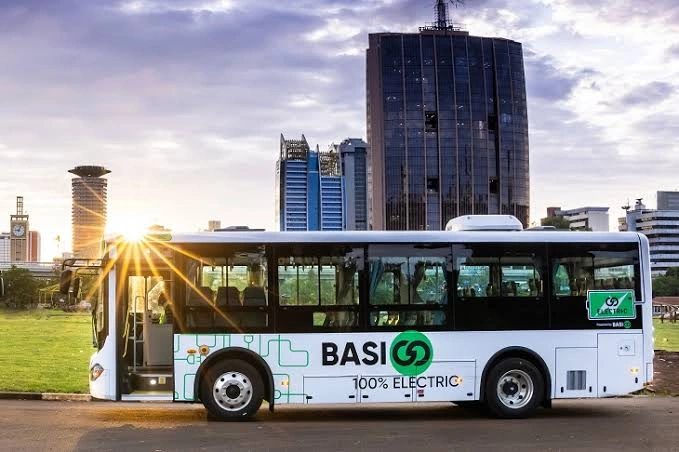
By 2026, BasiGo reported more than 100 buses operating in Kenya, while its vehicles were serving routes in Nairobi and other parts of the country.
This growth is important because public transport vehicles travel long distances every day. Replacing even a portion of diesel-powered buses with electric alternatives could make a noticeable difference in fuel consumption, operating costs and urban air pollution.
What makes an electric matatu different?
At first glance, an electric matatu may look similar to an ordinary public service vehicle. The biggest difference is hidden beneath the body.
Instead of a conventional diesel engine and fuel tank, an electric vehicle uses a large battery and an electric motor.
When the battery has enough charge, the motor converts electrical energy into movement. There is no traditional diesel engine producing the familiar noise and exhaust associated with conventional buses.
For passengers, one of the most noticeable differences is the quietness.
Electric buses produce much less engine noise, creating a calmer environment inside the vehicle. They also provide a smoother driving experience because electric motors deliver power differently from conventional engines.
Why Kenyan transport operators are interested
The environmental benefits of electric vehicles are important, but economics may be an even bigger reason for their growth.
Fuel is one of the major expenses facing public transport operators. Diesel prices can have a direct impact on the cost of running a bus or matatu.
Electric vehicles offer operators the possibility of reducing dependence on diesel.
BasiGo has also introduced a Pay-As-You-Drive financing model, designed to reduce the large upfront cost of purchasing an electric bus. Instead of requiring operators to carry the entire purchase cost immediately, the model links payments to vehicle usage.
That approach could be particularly important in Kenya, where financing the purchase of a new public transport vehicle can be a major challenge.
Electric matatus are leaving Nairobi
The electric transport story is no longer limited to Nairobi.
In 2025, BasiGo launched a pilot involving electric vans on inter-city routes. The vehicles were introduced on routes including Nyahururu–Nyeri, Nyahururu–Nakuru and Thika–Nairobi.
This development could prove significant.
For years, electric mobility in Kenya was largely associated with urban transport and electric motorcycles. The appearance of electric passenger vehicles on longer routes suggests that the technology is gradually moving into a wider section of the country’s transport network.
The changing face of the Kenyan matatu
Kenya’s matatu industry is famous for its creativity.
Colourful designs, music, unique names and eye-catching artwork have helped make Kenyan matatus part of the country’s popular culture. The arrival of electric vehicles does not necessarily mean that this culture will disappear.
Instead, the technology could create a new generation of Kenyan matatus that combine the country’s distinctive transport culture with modern electric technology.
Passengers could eventually see more electric vehicles operating alongside traditional diesel matatus on major routes.
What about charging?
One of the biggest questions surrounding electric public transport is simple:
Where will the vehicles get their electricity?
Electric buses need reliable charging infrastructure. As the number of vehicles increases, charging stations will have to expand alongside them.
BasiGo has been developing charging and service infrastructure while expanding its electric-bus network. The company has also reported new charging depots in locations including Komarock, Pipeline, Riruta, Juja and Nyahururu.
The development of this infrastructure will be critical to the future of electric public transport.
A bus cannot spend the whole day waiting to charge. Transport operators need vehicles that can complete their scheduled journeys and recharge efficiently before returning to the road.
Are electric matatus the future?
The answer may depend on several factors.
The cost of electric vehicles, availability of financing, charging infrastructure, electricity prices, battery technology and passenger demand will all influence how quickly Kenya moves away from traditional diesel-powered public transport.
There are also practical questions about long-distance operations, battery performance and the availability of charging stations outside major cities.
But the direction is becoming increasingly clear.
Electric public transport is no longer just an experiment on Kenyan roads.
It is becoming a real part of the country’s transport industry.
A quieter future for Kenyan roads
Imagine entering a busy Nairobi road and seeing dozens of buses moving through traffic without the familiar rumble of diesel engines.
That future may still be developing, but Kenya has already taken important steps toward it.
BasiGo’s expansion demonstrates that electric public transport can operate within Kenya’s existing matatu and SACCO system rather than completely replacing it with a new transport structure. The company’s buses are being integrated into routes operated by established public transport operators.
For passengers, the change could mean quieter journeys and potentially more comfortable buses.
For operators, it could mean a different approach to vehicle financing and energy costs.
For Kenya’s cities, it could mean cleaner public transport.
And for the country’s growing electric-mobility industry, it could be the beginning of something much bigger.
The Kenyan matatu is changing. The next chapter may not be powered by diesel — it may be powered by electricity.
Author
