
 News Guru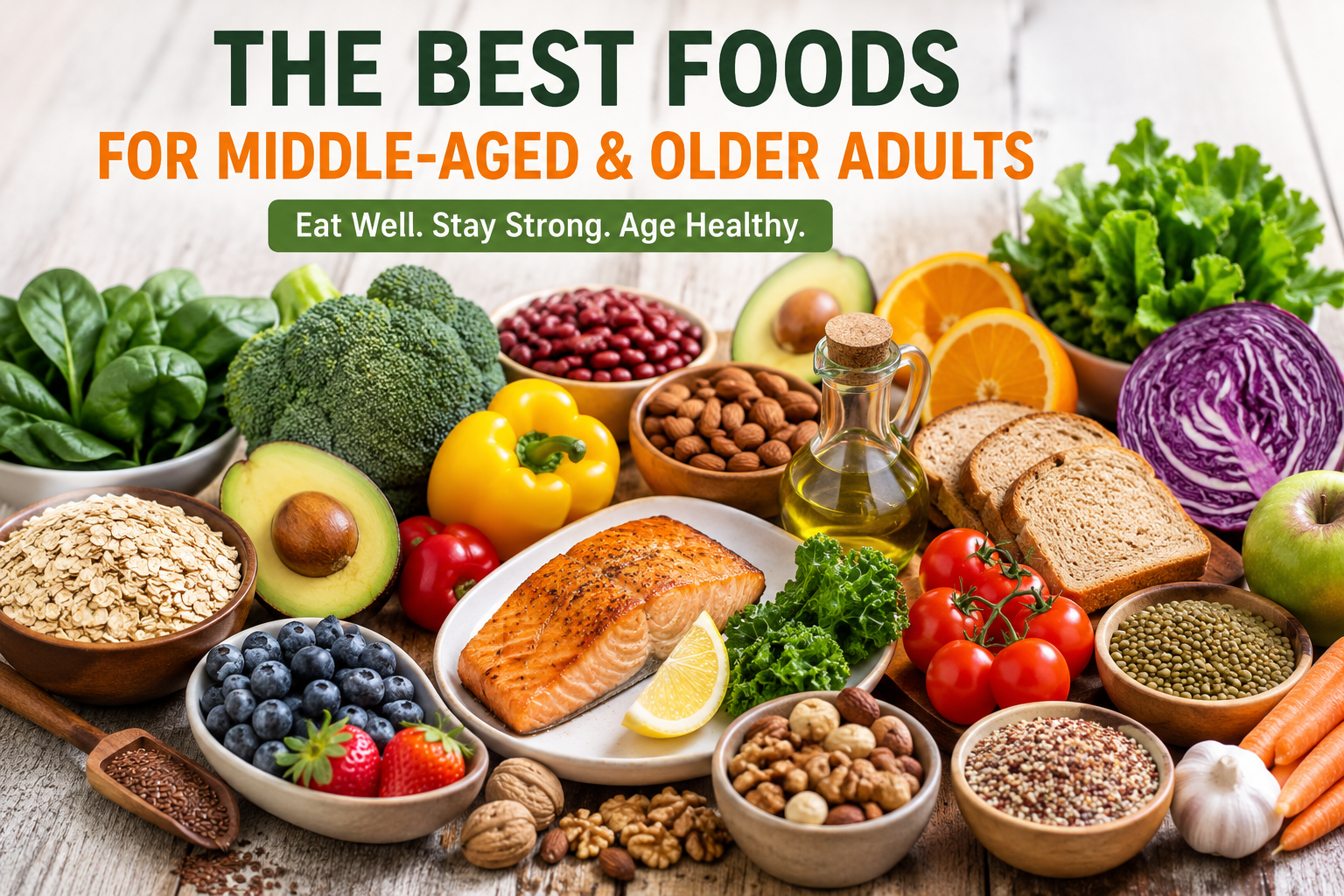
THE BEST FOODS FOR MIDDLE-AGED AND OLDER ADULTS
What to Eat More Of, What to Limit, and How the Right Foods Can Support Healthy Aging
Getting older is a natural part of life. But while we cannot stop the clock, we can make choices that support our bodies as we age.
One of the most important choices is food.
What we eat every day provides the energy and nutrients our bodies need to maintain muscles, bones, the heart, brain, immune system and other essential functions.
For people in middle age and older adults, eating well becomes particularly important because the body changes with age. Muscle mass can decline, appetite may change, and some people may absorb or use certain nutrients differently. At the same time, the risk of conditions such as high blood pressure, heart disease and type 2 diabetes can increase.
This does not mean older adults need a complicated diet.
In fact, healthy eating can be surprisingly simple.
The basic idea is:
Eat more nutritious whole foods and eat less of the foods that provide lots of calories, salt, sugar or unhealthy fats without many essential nutrients.
1. VEGETABLES SHOULD BE ON YOUR PLATE EVERY DAY
Vegetables are among the most important foods to include regularly.
Leafy greens such as spinach, kale and other dark-green vegetables provide a variety of vitamins and minerals.
Other vegetables such as carrots, tomatoes, broccoli, cabbage, peppers, pumpkin, onions and green beans add different nutrients and dietary fibre.
Don’t worry about finding one “super vegetable.”
The better approach is variety.
Try to eat vegetables of different colors throughout the week.
A simple meal might contain:
- Green vegetables
- Orange or yellow vegetables
- Tomatoes or other colorful vegetables
- Beans or another protein
- A whole grain or other nutritious staple
Vegetables can be steamed, boiled, baked, roasted or lightly cooked.
Try to avoid making deep-frying the main way you prepare them.
Why vegetables matter
A diet rich in vegetables provides fibre and many micronutrients and is associated with better overall health.
The World Health Organization recommends that people over age 10 consume at least 400 grams of fruits and vegetables per day as part of a healthy diet.
2. EAT FRUIT — BUT CHOOSE WHOLE FRUIT MORE OFTEN
Fruit is another important part of a healthy diet.
Apples, oranges, bananas, mangoes, papaya, berries, guavas, pears and other fruits can provide fibre, vitamins, minerals and other beneficial compounds.
The important distinction is between whole fruit and sugary drinks.
Eating an orange is not the same as drinking a large bottle of a sugary beverage.
Whole fruit contains fibre and requires chewing, which can make it more filling.
Try having fruit as a snack instead of automatically reaching for biscuits, sweets or pastries.
A simple habit:
Keep fruit where you can see it.
When healthy food is convenient, you’re more likely to choose it.
3. BEANS, LENTILS AND PEAS ARE POWERFUL EVERYDAY FOODS
Beans and other legumes deserve much more attention.
They can provide protein, fibre, vitamins and minerals and can be affordable compared with many animal-protein foods.
Examples include:
- Kidney beans
- Black beans
- Lentils
- Chickpeas
- Green peas
- Cowpeas
- Other locally available legumes
They can be added to soups, stews, salads or served with whole grains and vegetables.
For people trying to eat less processed meat, beans and lentils can be particularly useful.
Why fibre matters
Fibre helps support healthy digestion and is an important part of a healthy eating pattern.
It can also help meals feel more satisfying.
If your current diet is low in fibre, increase high-fibre foods gradually and drink adequate fluids unless your healthcare professional has advised otherwise.
4. CHOOSE WHOLE GRAINS MORE OFTEN
Bread, rice, maize, oats, millet and other grains can all be part of a healthy diet.
The key is choosing whole or minimally processed versions more often when possible.
Examples include:
- Oatmeal
- Brown rice
- Whole-grain bread
- Whole-grain maize
- Millet
- Barley
- Other locally available whole grains
Whole grains generally contain more fibre and nutrients than refined grains.
This doesn’t mean you can never eat white rice or white bread.
Healthy eating isn’t about creating a list of foods that you are forbidden to touch.
It’s about what you eat most of the time.
5. EAT ENOUGH PROTEIN AS YOU AGE
Protein becomes particularly important as people get older because maintaining muscle strength becomes increasingly important.
Good protein sources can include:
- Fish
- Eggs
- Beans
- Lentils
- Chickpeas
- Poultry
- Yogurt
- Milk
- Nuts and seeds
- Other nutritious protein sources appropriate to your diet
Try to include a protein source in your main meals.
For example:
Breakfast: Eggs + vegetables + whole-grain bread
Lunch: Beans + vegetables + whole grain
Dinner: Fish + vegetables + a nutritious carbohydrate
There is no need to eat enormous portions of meat to get protein.
A varied diet can provide protein from both plant and animal sources.
6. FISH CAN BE A GOOD CHOICE
For people who eat fish, it can be an excellent addition to a balanced diet.
Fish provides protein, and oily fish provide omega-3 fatty acids.
Consider options that are locally available and affordable.
How you cook the fish matters too.
Baking, grilling, steaming or lightly cooking fish can help avoid the large amounts of oil that can come with deep-frying.
And remember:
Fish is part of a healthy diet — it isn’t a medicine.
No single food can prevent every illness.
7. NUTS AND SEEDS: SMALL PORTIONS, LOTS OF NUTRIENTS
Nuts and seeds can make excellent additions to meals and snacks.
Examples include:
- Peanuts
- Almonds
- Walnuts
- Cashews
- Sunflower seeds
- Pumpkin seeds
- Sesame seeds
Choose unsalted varieties when possible.
Because nuts and seeds are relatively high in calories, you don’t need a huge amount.
A small portion can be enough.
8. CHOOSE HEALTHIER FATS
Your body needs fat, but the type of fat matters.
Foods such as nuts, seeds, avocado and some vegetable oils provide predominantly unsaturated fats.
WHO recommends replacing saturated and trans fats with unsaturated fats where possible.
This doesn’t mean eating unlimited oil or butter.
Even healthier fats contain a lot of energy.
Think about quality and quantity.
9. WATER SHOULD NOT BE FORGOTTEN
Food gets most of the attention, but hydration matters too.
Drink water regularly throughout the day according to your needs.
Some older adults may experience a reduced sense of thirst, so relying entirely on thirst may not always be ideal.
However, people with certain medical conditions may have specific fluid requirements or restrictions.
If your doctor has given you instructions about how much fluid you should drink, follow those instructions.
FOODS TO EAT LESS OF
Healthy eating isn’t just about adding good foods.
It is also about reducing foods that can become unhealthy when consumed too frequently or in large amounts.
1. Sugary drinks
Soft drinks, sweetened juices, energy drinks and other sugary beverages can add large amounts of free sugar without providing much nutritional value.
Make water your everyday drink more often.
WHO recommends limiting free sugars to less than 10% of daily energy intake, with a further reduction toward 5% offering additional health benefits.
2. Too much salt
Excessive sodium intake is associated with increased blood pressure and cardiovascular risk.
Salt can come from more places than the salt shaker.
It may be present in:
- Processed foods
- Instant noodles
- Packaged snacks
- Processed meats
- Sauces
- Stock cubes
- Fast foods
- Canned foods
WHO recommends adults consume less than 5 grams of salt per day, equivalent to less than 2 grams of sodium.
Instead of relying heavily on salt, experiment with garlic, onions, ginger, herbs, spices, lemon and other seasonings.
3. Processed meats
Processed meats can include products such as sausages, bacon, ham and other meats that have been processed through salting, curing, fermentation, smoking or similar processes.
These foods should not dominate the diet.
Choose beans, fish, poultry, eggs and other nutritious protein sources more often.
4. Deep-fried foods
Fried foods can be enjoyable, but eating them frequently can make it much easier to consume excessive calories and unhealthy fats.
You don’t have to eliminate fried food completely.
Instead, make grilled, baked, steamed, boiled or roasted foods your regular choices more often.
5. Excessive sweets and pastries
Cakes, cookies, sweets, doughnuts and pastries can contain substantial amounts of added sugar and saturated fat.
Enjoying them occasionally is different from making them everyday staples.
A healthier pattern is to make fruit, nuts, yogurt or other nutritious foods your regular snacks.
WHAT SHOULD A HEALTHY PLATE LOOK LIKE?
You don’t need to weigh every ingredient.
Instead, think about balance.
A practical plate can contain:
½ plate — vegetables
A variety of vegetables.
¼ plate — protein
Beans, lentils, fish, eggs, poultry or another nutritious protein.
¼ plate — whole grain or other nutritious carbohydrate
Brown rice, whole-grain maize, oats, millet, potatoes or another suitable staple.
Add a piece of whole fruit when appropriate and choose water as your main drink.
This is not a rigid medical prescription.
It is simply a practical way to think about balanced meals.
A SIMPLE WEEKLY FOOD PATTERN
Healthy eating becomes easier when you stop looking for a perfect meal and start creating a good pattern.
MONDAY
Breakfast: Oats + fruit + nuts
Lunch: Beans + vegetables + whole grain
Dinner: Fish + vegetables + potatoes
TUESDAY
Breakfast: Eggs + vegetables + whole-grain bread
Lunch: Lentils + vegetables + brown rice
Dinner: Chicken + vegetables + whole grain
WEDNESDAY
Breakfast: Yogurt + fruit + oats
Lunch: Chickpeas + vegetables
Dinner: Fish + vegetables + whole grain
THURSDAY
Breakfast: Eggs + fruit
Lunch: Beans + vegetables + whole grain
Dinner: Vegetable soup + protein source
FRIDAY
Breakfast: Oats + banana + seeds
Lunch: Fish + vegetables + whole grain
Dinner: Lentils + vegetables
WEEKEND
Enjoy a variety of nutritious foods, including traditional and cultural dishes, while keeping portions sensible and limiting excessive salt, added sugar and unhealthy fats.
DON’T FORGET THE OTHER HALF OF HEALTH
Food matters.
But food is not the entire story.
A healthy lifestyle also includes:
Regular physical activity.
Adequate sleep.
Maintaining healthy relationships.
Managing stress.
Avoiding tobacco.
Limiting alcohol.
Keeping up with recommended health checks.
And perhaps most importantly:
Don’t wait until you feel sick to start paying attention to your health.
Regular medical checkups can identify problems such as high blood pressure, high blood sugar or abnormal cholesterol before they necessarily cause obvious symptoms.
THE BOTTOM LINE
Middle age and older adulthood are not periods when you have to give up good food.
They are periods when food deserves more attention.
Eat more vegetables.
Eat whole fruits.
Include beans and other legumes.
Choose whole grains more often.
Get adequate protein.
Include fish if you eat it.
Choose healthier fats.
Drink water.
Reduce excessive salt.
Reduce sugary drinks.
Limit highly processed foods.
Limit excessive fried foods.
And remember that healthy eating doesn’t require perfection.
The best diet is not the one you follow for seven days.
It is the pattern of eating you can maintain for years.
Your body has carried you through childhood, work, family, stress, celebrations, disappointments and countless ordinary days.
As you grow older, give it the raw materials it needs to keep doing its job.
Don’t search for a miracle food.
Build a healthy plate.
Do it today.
Do it tomorrow.
Then keep doing it.
Because healthy aging isn’t about finding one magical ingredient.
It’s about making better choices, one meal at a time.
Author
